Seated & Chair Exercises for Seniors 65+: A Practical Guide
Seated chair exercises for seniors 65+ — a practical set of moves with clear form cues, plus how to progress safely from sitting toward standing.
Why Start Seated
Seated exercise isn’t a lesser version of “real” training — for many adults 65+ it’s the correct starting point. A chair removes balance from the equation, which lets you build strength and confidence first, on stable ground, before adding the harder demand of doing things on your feet. It’s a base, not a ceiling.
This guide gives you a concrete set of seated moves with real form cues. As always: talk to your doctor before starting a new routine, and if a movement causes pain, stop.
Setting Up Safely
- Use a sturdy chair without wheels, ideally with the back against a wall.
- Sit tall — hips back in the seat, feet flat on the floor, about hip-width apart.
- Move at a pace where you could still hold a conversation. Slow and controlled beats fast every time.
Warm-Up (2–3 minutes)
Shoulder rolls. Roll both shoulders backward in a slow circle, 8–10 times, then forward. This wakes up the upper back.
Ankle circles. Lift one foot slightly, draw 5 slow circles each direction, switch feet. This prepares the ankles for everything below.
Seated marches. Lift one knee, lower it, then the other — like marching in place while seated. 20–30 alternating lifts. This raises your heart rate gently and primes the hips.
Strength Moves
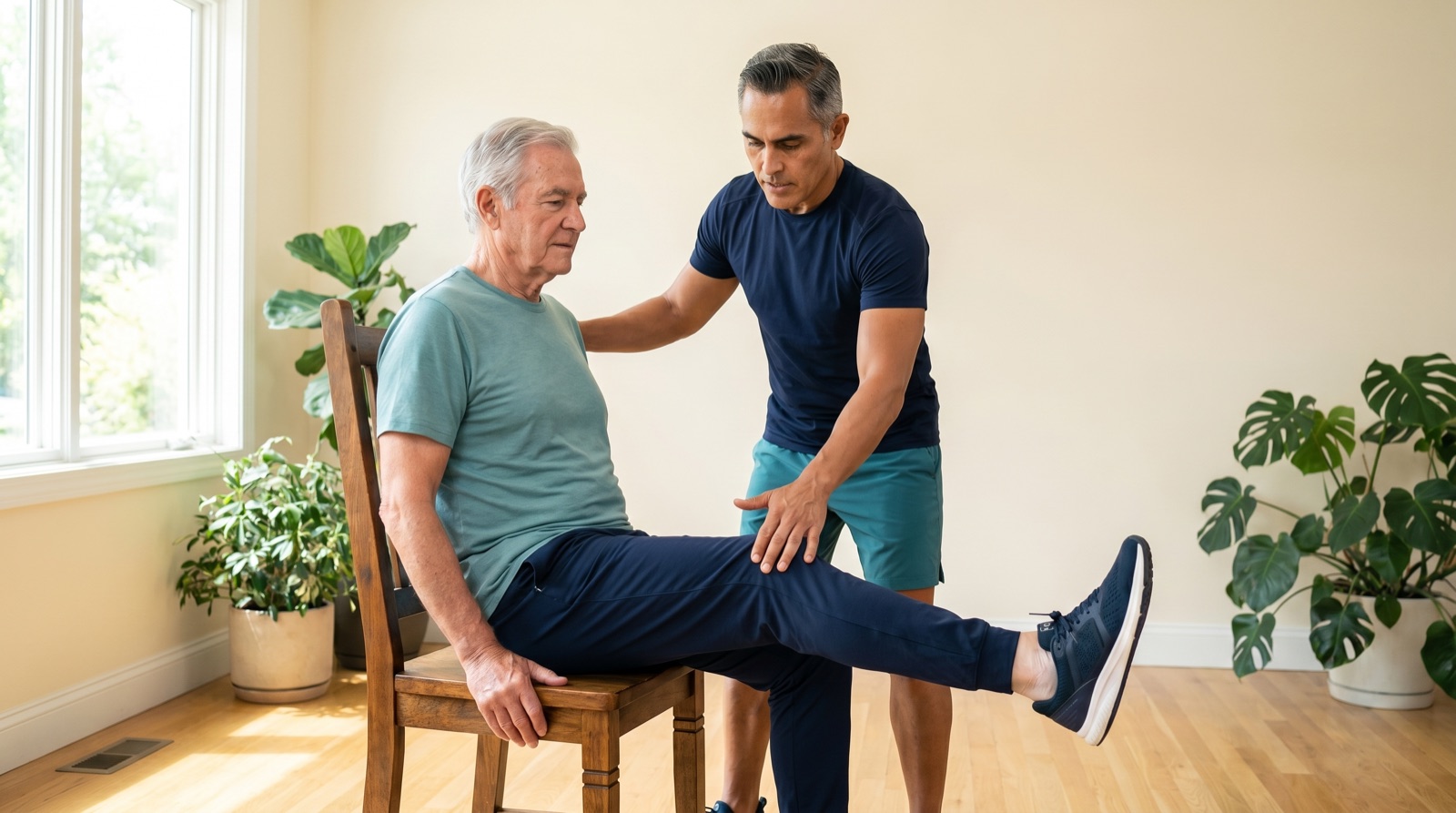
Seated knee extensions. Straighten one leg until it’s roughly level with your hip, pause for one second, lower with control. The control on the way down matters as much as the lift. 8–12 per leg.
Seated calf raises. With feet flat, press through the balls of your feet to lift both heels, pause, lower slowly. 12–15 reps. This strengthens the lower legs that everyday walking depends on.
Overhead reach. Start with hands at your shoulders and reach both arms straight overhead, then lower. Keep ribs down — don’t arch the back to “reach higher.” 8–10 reps. Add light hand weights only once the movement is smooth without them.
Seated torso rotations. Sit tall, arms crossed over your chest, and turn your upper body slowly to one side, then the other. Lead with the chest, not the chin. 8–10 per side.
The Most Important Move: Sit-to-Stand
If you do one thing from this article, do this. Standing up from a chair is the single most functional movement of daily life — and it is trainable.
From a tall seated position, lean your chest slightly forward over your feet, press through your heels, and stand up fully. Then sit back down with control — don’t drop. That controlled lowering is the part most people skip and the part that builds the most useful strength. Start with 5 reps. Use the armrests if you need them, and use them less over time.
How to Progress
The goal of seated training is to earn the next step. Progress looks like: more reps, then slower lowering phases, then light weights, then fewer reps using the chair for the sit-to-stand — until standing exercises become the natural next chapter. There’s no fixed timeline; progress at the pace your body confirms is solid.
Where a Trainer Fits
A guide can describe a movement; it can’t watch yours. The value of working with a certified trainer is real-time correction — making sure each rep is done with a 100% form and technique focus, and progressing you only when you’re genuinely ready.
Saul holds a Seniors Training Certification and designs programs specifically for adults 65+, in person in Miami or remotely through online coaching. Learn more about senior personal training in Miami, or book a free consultation to build a routine around your starting point.