Strength Training for Seniors: A Beginner's Framework
Strength training for seniors 65+ — why it matters, the movement patterns to prioritize, and a realistic weekly framework to start safely.
Why Strength Training Is the Highest-Leverage Exercise After 65
Muscle mass and bone density both decline with age, and both respond directly to resistance training — this is one of the most consistent findings in exercise research, and it applies at any starting age, including well into your 70s and 80s. For older adults, the practical payoff isn’t aesthetic; it’s functional. Stronger legs mean an easier time with stairs. Stronger grip and upper body mean carrying groceries or grandchildren without strain. Strength training is, in a very direct sense, independence training.
As with any new routine, check with your doctor before starting, especially if you have existing joint or health concerns.
The Movement Patterns That Matter Most
Rather than chasing specific muscles, senior strength programs are built around a small set of patterns that carry over to daily life:
Sit-to-stand (squat pattern). The foundation of getting up from a chair, a car, or the floor. Start with a chair behind you for confidence, progressing toward standing up without using your hands.
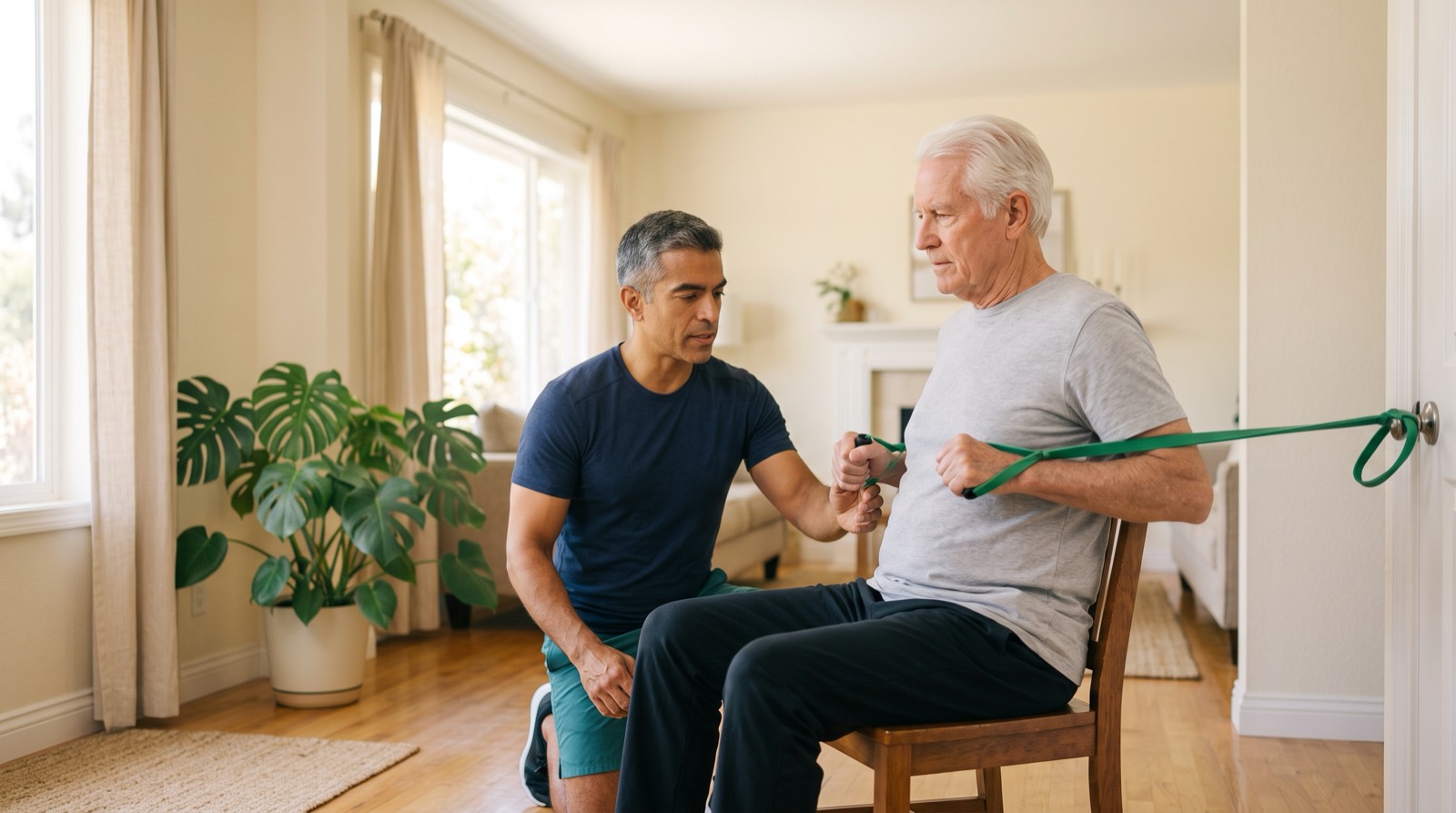
Rows (pull pattern). Using a resistance band or light dumbbells, pulling motion that supports posture and counters the forward-hunched position that develops from sitting.
Presses (push pattern). Pushing a weight or band away from your body — supports tasks like pushing open a heavy door or lifting something onto a shelf.
Hip hinge. Bending at the hips with a flat back, the pattern behind picking something up off the floor safely. Often practiced first with just bodyweight or holding onto a counter.
Farmer’s carry. Walking while holding a weight in each hand — simple, low-skill, and directly transfers to carrying groceries or luggage.
A Realistic Starting Framework
- Frequency: 2 sessions per week is enough to see real progress; 3 is ideal once you’re comfortable with the movements.
- Format: 4–6 exercises per session covering the patterns above, 1–2 sets of 8–12 reps to start.
- Progression: Once a weight or resistance level feels clearly manageable for all reps with good form, increase slightly — small, steady increases beat large jumps.
- Rest: At least one rest day between strength sessions in the first months to allow recovery.
Common Concerns, Addressed Honestly
“Isn’t it risky to lift weights at my age?” Resistance training, properly progressed and with a 100% right form and technique focus, is one of the more extensively studied forms of exercise for older adults. The starting point matters — beginning with bodyweight and light resistance and progressing gradually is the standard, sensible approach.
“I’ve never lifted weights — is it too late to start?” No. Adults who begin strength training in their 60s, 70s, and beyond consistently see meaningful gains in strength and function — the body adapts to appropriate training at any age.
Where a Trainer Fits
The technical parts — how much weight, how to progress, whether your form on a hip hinge is actually protecting your back — are exactly where a trainer’s real-time feedback matters most, especially in the first months of a new program.
Saul holds a Seniors Training Certification and builds strength programs specifically for adults 65+, in person in Miami or through online coaching. Pair strength work with balance exercises for seniors for a complete foundation. Learn more about senior personal training in Miami, or book a free consultation.