Healthy Pantry Staples and How to Eat Well When You're Eating Out
The healthy pantry staples worth keeping stocked, plus practical strategies for eating healthy at restaurants — without giving up eating out.
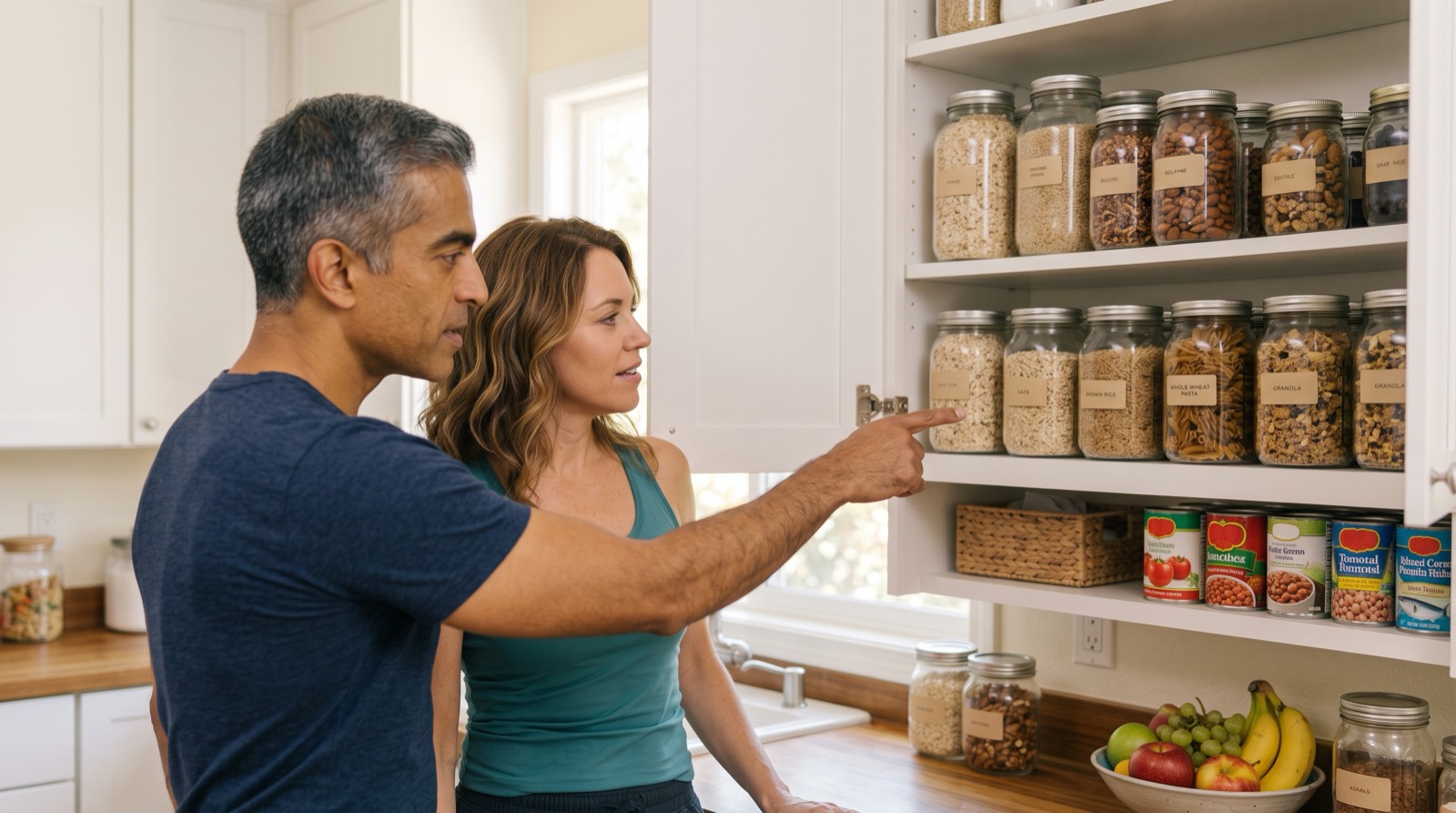
Building a Pantry That Makes the Healthy Choice the Easy Choice
The single biggest lever for eating well at home isn’t willpower — it’s what’s already in your kitchen when you’re hungry and short on time. A pantry stocked with the right staples turns “what should I make” into a five-minute answer instead of a decision that ends in takeout.
Proteins: canned tuna or salmon, canned beans and lentils, eggs, plain Greek yogurt — shelf-stable or fridge staples that turn into a real meal fast.
Whole grains: brown rice, quinoa, rolled oats, whole-wheat pasta — a base you can build almost any meal around.
Healthy fats: olive oil, nuts, nut butters, avocado when in season — useful for cooking and for keeping meals satisfying.
Flavor without the guesswork: a basic spice rack (garlic powder, cumin, paprika, black pepper), low-sodium broth, and a couple of vinegars or hot sauces — this is what keeps simple ingredients from feeling boring.
Produce that lasts: frozen vegetables and fruit are just as nutritious as fresh and remove the “it went bad before I used it” problem entirely.
How to Read a Label Fast
You don’t need to analyze every number. Two checks cover most of what matters: check the serving size first (it’s often smaller than you’d assume), and scan the ingredient list — the shorter and more recognizable, the better. That’s usually enough to tell you what you’re actually buying.
Eating Healthy at Restaurants — Without Giving Up Restaurants
Miami has too many good restaurants to avoid them, and you shouldn’t have to. A few practical habits go a long way:
- Look for a protein and vegetables first, then decide what else fits — this naturally anchors the plate instead of starting from the bread basket.
- Ask for sauces and dressings on the side. This one change lets you control how much you’re actually adding, without changing what you order.
- Don’t arrive starving. A small snack beforehand (some nuts, a piece of fruit) prevents the kind of hunger that leads to over-ordering.
- Pick one thing to enjoy fully — dessert, bread, a cocktail — rather than restricting everything and then feeling like the whole meal was a compromise. Sustainable eating out is about balance, not elimination.
The Real Skill: Making This Automatic
None of this works as a one-time read. The goal is to make these choices automatic enough that you’re not thinking hard about them at the grocery store or the dinner table. That’s exactly what practice — ideally with someone watching you do it in real situations — builds faster than reading alone.
That’s the idea behind Saul’s on-the-spot food coaching: learning to shop, cook, and order out in the actual places you do it, with guidance in the moment instead of a plan you have to interpret on your own. For ongoing structured guidance around your training, see sports nutrition coaching, or book a free consultation to talk through what fits your routine.