Functional Fitness for Seniors: Training for Real Life
Functional fitness for seniors explained — what it is, why it's different from general exercise, and the movement patterns that support daily independence.
What “Functional Fitness” Actually Means
Functional fitness is training built around the movements you actually use every day — not exercises for their own sake. The test for whether a movement belongs in a functional program is simple: does it carry over to something you do outside the gym? Carrying groceries, getting up from a low couch, reaching an overhead shelf, climbing stairs — these are the movements functional training is built around.
For seniors specifically, this approach matters more than chasing a particular muscle group. The goal isn’t aesthetics — it’s staying capable and independent.
The Core Movement Patterns
Squatting — the pattern behind sitting down and standing up. Chair squats are the natural entry point, progressing toward unassisted squats as strength builds.
Hinging — bending at the hips rather than the spine, used any time you pick something up off the floor or lean into a car. Practicing this pattern correctly protects the lower back in daily life, not just in the gym.
Pushing and pulling — pushing a door open, pulling a drawer, lifting a bag onto a shelf. Training both directions keeps the upper body balanced and capable.
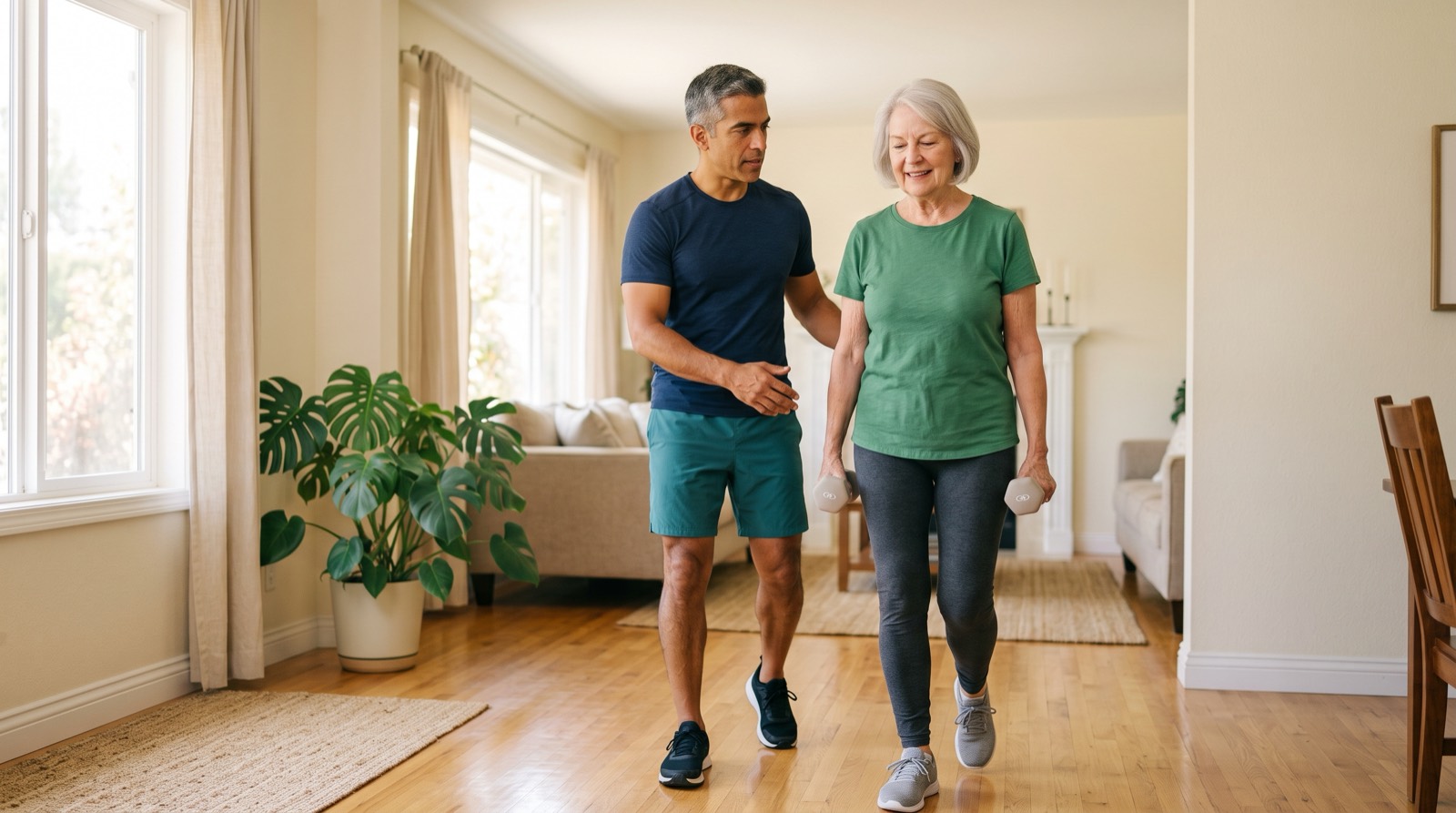
Carrying — walking while holding weight, like grocery bags or a suitcase. This is one of the most undertrained but most-used patterns in daily life, and it’s simple to build: farmer’s carries with light weights build real, transferable strength.
Rotating and reaching — turning to check a blind spot, reaching across the body. Controlled rotational work keeps the trunk mobile and stable at the same time.
Why This Approach Fits Seniors Specifically
General exercise programs often chase variety or intensity. Functional programs for older adults prioritize something different: movement quality first, then load, then complexity — always building toward tasks that matter in daily life rather than toward a number on a machine.
This also means functional training naturally overlaps with balance and mobility work, since most real-world movements combine strength, balance, and range of motion at once rather than isolating a single muscle.
A Sample Functional Session
- Warm-up: 5 minutes of joint mobility (hips, shoulders, ankles)
- Main work: 3–4 functional patterns (e.g., chair squats, rows, carries, hip hinges), 2–3 sets each
- Finish: A short balance or rotation drill
Sessions run with a 100% right form and technique focus, especially on the hinge and squat patterns where technique matters most.
Where a Trainer Fits
The hardest part of functional training isn’t the concept — it’s execution under real supervision, catching small form breakdowns before they become habits, and progressing the right patterns at the right pace.
Saul holds a Seniors Training Certification and builds every senior program around these functional patterns, in person in Miami or through online coaching. Learn more about senior personal training in Miami, or book a free consultation.